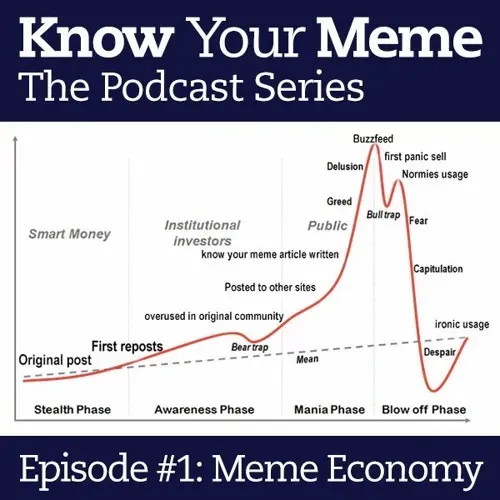
The rise of the Cockroach Janta Party is, on the surface, a story about internet culture.
What began as an online reaction to a controversial political remark quickly evolved into a phenomenon that attracted significant attention across social media platforms. Within a remarkably short period of time, what started as satire developed into a recognizable digital movement, generating conversations that extended well beyond the communities where it first emerged.
Whether the movement itself has long-term political significance remains to be seen.
What is already clear, however, is that its rapid growth offers an interesting window into how influence is created in the digital age.
For decades, public movements relied on formal structures to gain visibility. Political organizations invested years in building local networks, mobilizing volunteers, and developing communication channels capable of reaching large audiences. Visibility was largely controlled by institutions with the resources and infrastructure required to shape public discourse.
The internet has altered that equation.
Today, distribution is increasingly driven by participation. Individuals no longer need to be passive consumers of information. They can amplify, reinterpret, and contribute to ideas in real time. A movement that successfully captures public attention can grow with remarkable speed, not because it possesses traditional organizational advantages, but because people choose to engage with it.
That shift is not limited to politics.
The same dynamics can be observed across business, media, entertainment, and technology. Some of the most successful startups of the last decade have grown by building communities before products reached maturity. Many creators have transformed personal audiences into businesses. Media companies increasingly compete not only on content quality but also on their ability to generate engagement and participation.
The underlying principle is the same.
Attention has become more decentralized, and communities have become more influential.
The significance of the Cockroach Janta Party therefore extends beyond the movement itself. Its rapid rise highlights how quickly ideas can gain traction when they align with existing public sentiment. The speed of adoption tells us less about the organization behind the movement and more about the environment in which it emerged.
In many ways, the story reflects a broader shift taking place across society. Institutions are no longer the sole gatekeepers of attention. Communities now play a far greater role in determining which conversations gain momentum and which fade away.
Startup Unplugged Perspective
For founders, creators, and business leaders, the lesson is not political. It is structural.
The ability to build and mobilize communities is becoming an increasingly valuable capability. Products, campaigns, and even movements are finding success not simply because they exist, but because they create participation.
In an era defined by information abundance, attention remains scarce. The organizations that understand how communities form, engage, and grow are likely to hold a significant advantage over those that continue to rely solely on traditional models of communication.
Share your take
As influence becomes increasingly community-driven, who do you think will shape the next decade more: institutions or online communities?
Written by
Team Startup Unplugged